Gulf Union Ozone maintains flange inventory across pressure classes 150# to 2500# for oil & gas, petrochemical, and infrastructure projects throughout Saudi Arabia. Weld neck, blind, slip-on, socket weld, and threaded types — carbon steel ASTM A105 and stainless steel ASTM A182 — same-day dispatch from Jeddah.

Flanges connect pipe sections, valves, and equipment and must be selected to match the piping class, pressure rating, temperature, and service conditions. Gulf Union Ozone stocks all standard flange types to ASME B16.5 with full material documentation.
The weld neck flange features a long tapered hub that transitions gradually from the flange body to the pipe wall thickness. This taper distributes stress along the hub and into the pipe, eliminating the stress concentration that occurs at the junction — making it the preferred flange type for high-pressure, high-temperature, and cyclically loaded service. The bore matches the pipe's internal diameter exactly, resulting in minimal turbulence and flow restriction. Weld neck flanges are welded to the pipe end using a full penetration butt weld (butt welded), which is radiographically examined in critical service.
A blind flange has no bore — it is a solid disc used to close off the end of a pipe, vessel nozzle, or valve opening. Blind flanges are essential in piping systems for isolation, line blocking, and hydrostatic pressure testing. They are also used as inspection and maintenance access points. Because the blind flange must withstand full system pressure acting across its full diameter, heavier flanges at higher pressure classes experience significant bending stress — proper gasket selection and bolt torque are critical.
The slip-on flange is slipped over the pipe end and then fillet welded in place — both on the outside face and on the inside bore — resulting in two welds per flange. This dual-weld configuration provides adequate strength for low-pressure applications while being significantly cheaper than weld neck flanges. The slip-on flange is well suited for utility services, water systems, and non-critical process lines rated Class 150 and 300. It is not recommended for Class 600 and above, or for cyclic, fatigue, or high-temperature services.
Socket weld flanges are designed for small-bore piping — typically 2″ NPS and below — where the pipe is inserted into the flange's socket and a single fillet weld is applied to the outside. The socket retains the pipe end, making alignment easier during assembly. Socket weld flanges are rated to ASME B16.5 and provide pressure capacity equivalent to Class 3000 socket weld fittings. They are used in high-pressure instrument connections, chemical injection lines, and small-bore instrument bridles on oil and gas facilities.
Threaded flanges feature a screwed internal thread that allows connection to a pipe without welding — useful where welding is not practical due to hazardous atmospheres, confined spaces, or materials that cannot be welded. The pipe is screwed directly into the bore of the threaded flange. They are classified for low-pressure, non-critical applications in Class 150 and 300, and are not suitable for cyclic conditions, severe thermal gradients, or services above 260°C. Threaded flanges to ASME B16.5 conform to NPT thread form.
Gulf Union Ozone stocks five flange face types — raised face (RF), ring type joint (RTJ), flat face (FF), large male/female, and tongue & groove — across all ASME B16.5 pressure classes (150 through 2500) in weld neck, slip-on, socket weld, blind, lap joint, and threaded configurations. Standard bore range covers NPS ½″ through 24″ per ASME B16.5; large-bore flanges from NPS 26″ to 60″ are sourced to ASME B16.47 Series A (MSS SP-44) or Series B (API 605). Bore schedule is stocked to match common pipe schedules — Sch 40, 80, 160, and XXS in carbon steel; Sch 10S, 40S, and 80S in stainless. Wall thickness and facing dimensions meet ASME B16.5 tolerances. Third-party inspection (TPI) by Bureau Veritas, SGS, or Aramco-approved surveyors can be arranged. All flanges are held in our Jeddah warehouse for same-day dispatch against purchase order.
Flange material selection is governed by the piping class, which defines service temperature, pressure, and corrosion resistance requirements. Gulf Union Ozone stocks the three most commonly specified flange material groups in Saudi Arabia.
Carbon steel is the most widely used flange material in oil and gas applications. Gulf Union Ozone stocks two principal carbon steel flange grades: full carbon steel flange guide →
Stainless steel flanges are specified for corrosive service, sanitary applications, seawater handling, chemical processing, and offshore installations. Material standard is ASTM A182 for forged flanges. Gulf Union Ozone stocks the four principal austenitic stainless steel grades:
Alloy steel flanges are used in high-temperature process services above the practical limit of carbon steel — typically above 454°C. The chromium-molybdenum (Cr-Mo) grades provide superior creep resistance and elevated temperature strength. Gulf Union Ozone stocks the three principal alloy steel flange grades for Saudi Aramco and petrochemical projects:
Flanges for Saudi Aramco projects are available in three material families: carbon steel (ASTM A105N forged, A516 Gr.70 plate), stainless steel (A182 F304L and F316L), and alloy steel (A182 F11 Cr-Mo and F22 Cr-Mo for elevated temperature service). Carbon steel A105N covers the majority of process piping up to Class 2500; duplex stainless A182 F51 (UNS S31803) and super duplex F53 (UNS S32750) are available on indent for sour service per SAES-L-133. All flanges are supplied with EN 10204 3.1 mill test certificates showing chemical composition, mechanical properties, and Charpy impact values where specified. Heat-number traceability is maintained from mill to delivery, satisfying SAEP-347 Annex 4 requirements. Positive Material Identification (PMI) reports and NACE MR0175/ISO 15156 compliance declarations are available on request. Third-party inspection by an Aramco-approved surveyor can be coordinated before shipment from our Jeddah warehouse.
The most common facing for ASME B16.5 Class 150 and above. A small raised ring concentrates the gasket load on a smaller area, improving sealing efficiency. Paired with spiral wound gaskets or ring gaskets. RF is standard on the majority of process piping flanges in Saudi Arabian oil and gas projects.
The flange face is flush with the bolt circle — no raised ring. Flat face flanges are used when connecting to cast iron or ductile iron flanged equipment such as pumps, compressors, and valves, where the rigid material cannot accommodate the load concentration of a raised face. Full-face gaskets spanning the full flange face are required with FF flanges.
A groove machined into the flange face receives a solid metal ring gasket — oval or octagonal cross-section — which is compressed on make-up to create a metal-to-metal seal. RTJ facing is used for high-pressure and high-temperature service, particularly Class 900 and above, and is mandatory on Christmas tree and wellhead flanges in Aramco upstream applications. The metal-to-metal seal provides superior leak resistance compared to soft gasket systems.
| Pressure Class | Typical Application | Max PSI (A105, 100°F) |
|---|---|---|
| Class 150 | Utility, low-pressure process | 285 |
| Class 300 | Medium-pressure process | 740 |
| Class 600 | Refinery, gas plant, pipeline | 1480 |
| Class 900 | High-pressure gas, wellhead | 2220 |
| Class 1500 | High-pressure injection, HP gas | 3705 |
| Class 2500 | Very high-pressure specialty | 6170 |
Pressure ratings are per ASME B16.5 Table 2-1.1 for Group 1.1 material (ASTM A105) at 100°F. Ratings decrease with increasing temperature — always verify your piping class specification.
Specifications last verified: August 2026
Specifying the correct flange requires matching three parameters: facing type (RF for Class 150–600, RTJ mandatory for Class 900 and above), pressure class (determined by the ASME B16.5 P-T rating table for the body material at operating temperature), and bore schedule (must match the pipe schedule). For NPS 26″ and above, ASME B16.47 Series A or Series B replaces B16.5 as the governing standard; series selection depends on the upstream piping specification or Aramco piping class. Bore schedule must align with the connected pipe — Sch 40 and 80 are most common in carbon steel process lines, while Sch 10S through 80S apply in stainless systems. Weld neck flanges require matching bore and hub wall to avoid stress risers at the weld joint. Gulf Union Ozone engineers review your line designation table (LDT) or piping material class (PMC) to confirm the correct specification before order confirmation, eliminating costly material returns.
Use this table to identify the correct flange type, material, pressure class, and facing for common service conditions on Saudi Aramco EPC projects.
| Service Condition | Recommended Type | Material | Pressure Class | Facing |
|---|---|---|---|---|
| Standard hydrocarbon process piping | Weld Neck (WN) | ASTM A105N | 150 / 300 / 600 | RF |
| High-pressure gas / wellhead | Weld Neck (WN) | ASTM A105N | 900 / 1500 / 2500 | RTJ |
| Sour service (H₂S environment) | Weld Neck (WN) | A350 LF2 / A182 F316L | 150 – 1500 | RTJ |
| Stainless steel process lines | Weld Neck (WN) | A182 F316L | 150 / 300 / 600 | RF |
| Blinding / inspection points | Blind Flange (BL) | ASTM A105N | Match header class | RF / RTJ |
| Low-pressure utility / cooling water | Slip-On (SO) | ASTM A105N | 150 / 300 | RF |
| Instrument / impulse connections | Socket Weld (SW) | A105N / A182 F316L | 3000 / 6000 lb | RF |
| Large-bore pipeline (> NPS 24″) | Weld Neck / Blind | ASTM A105N / A182 | 150 – 900 | RF / RTJ |
ASME B16.5 does not cover pipe sizes above NPS 24″. For larger diameters, specify ASME B16.47 Series A (MSS SP-44) for high-pressure pipeline service, or Series B (API 605) for lower-pressure vessel and header connections. The series must match your piping class or Aramco project specification — they are not interchangeable. Gulf Union Ozone can source B16.47 flanges to order; include the series designation, pipe schedule, and facing on your RFQ. Indicative lead time is 4–8 weeks from confirmed order; quotation returned within 24 hours.
Gulf Union Ozone stocks flanges compatible with multiple SAEP-347 Annex 4 material numbers. For Saudi Aramco projects, flanges must conform to the specific material number requirements including material grade, end-facing, pressure class, and documentation — MTCs, Certificates of Conformance, and manufacturer's mill certificates.
For larger diameter flanges — typically above 24″ NPS — the ASME B16.47 standard applies instead of B16.5. ASME B16.47 covers Series A (MSS SP-44, used for high-pressure pipeline applications) and Series B (API 605, used for low-pressure pipeline and vessel applications). Gulf Union Ozone can source B16.47 flanges on request for trunk pipeline and large vessel work.
Provide the following to receive an accurate quotation: (1) Pipe size — NPS e.g. 6″, (2) Pressure class — e.g. Class 300, (3) Flange type — WN / BL / SO / SW / TH, (4) Facing — RF / FF / RTJ, (5) Material — ASTM A105 / A182 F316L etc., (6) Standard — ASME B16.5 or B16.47, (7) Quantity. Include the Aramco material number if applicable.
| Attribute | Range / Options |
|---|---|
| Standard | ASME B16.5 · B16.47 |
| Size Range | ½″ to 24″ NPS (60″ on request) |
| Pressure Classes | 150# · 300# · 600# · 900# · 1500# · 2500# |
| Types | WN · BL · SO · SW · TH |
| Facing | RF · FF · RTJ |
| Carbon Steel | A105 · A350 LF2 |
| Stainless Steel | A182 F304/F304L/F316/F316L |
| Alloy Steel | A182 F11 · F22 |
| Flange Type | Material (ASTM) | Pressure Class(es) | Standard Facing | Standard |
|---|---|---|---|---|
| Weld Neck, Blind, Slip-On | ASTM A105N | 150 – 2500 | RF / RTJ | ASME B16.5 |
| Socket Weld, Threaded | ASTM A105N | 2000, 3000, 6000 lb | RF | ASME B16.11 |
| Weld Neck, Blind | ASTM A350 LF2 | 150 – 1500 | RF / RTJ | ASME B16.5 |
| Weld Neck, Blind, Slip-On | ASTM A182 F304L | 150 – 1500 | RF / RTJ | ASME B16.5 |
| Weld Neck, Blind, Slip-On | ASTM A182 F316L | 150 – 1500 | RF / RTJ | ASME B16.5 |
| Weld Neck, Blind | ASTM A182 F11 | 150 – 2500 | RF / RTJ | ASME B16.5 |
| Weld Neck, Blind | ASTM A182 F22 | 150 – 2500 | RF / RTJ | ASME B16.5 |
15 total SAEP-347 Annex 4 flange material numbers. RTJ facing is required for Class 900 and above; RF is standard for Class 150–600. All material numbers held in stock at our Jeddah warehouse with EN 10204 3.1 MTCs.
Gulf Union Ozone holds all 15 SAEP-347 Annex 4 flange material numbers in carbon steel (A105N), stainless steel (A182 F304L/F316L), and alloy steel (A182 F11/F22) across Class 150 to 2500, sized from NPS ½″ to 24″ per ASME B16.5 and NPS 26″ to 60″ per ASME B16.47 Series A/B. Every order is supported by EN 10204 3.1 MTCs showing chemical analysis, tensile properties, and Charpy impact results; ASME B16.5 dimensional compliance certificates covering facing finish, bolt-circle, and flange thickness; and full heat-number traceability from mill certificate to delivery note. Positive Material Identification (PMI) reports by XRF testing are available for all stainless and alloy items. Third-party inspection by Bureau Veritas or SGS can be arranged before dispatch from our Jeddah warehouse. This complete documentation package satisfies Saudi Aramco Goods Receipt requirements under SAEP-347, enabling same-day GR posting without hold-up.
Gulf Union Ozone stocks ASME B16.5 flanges across pressure classes 150# through 2500# — weld neck, blind, slip-on, socket weld, and threaded configurations — in ASTM A105N carbon steel and A182 F304/F316 stainless steel from our Jeddah warehouse. All SAEP-347 Annex 4 flange material numbers are held in stock for same-day dispatch.
Yes. Our flange inventory includes all material numbers compatible with Saudi Aramco Engineering Procedure SAEP-347. Full Material Test Certificates (MTCs) per EN 10204 Type 3.1, Certificates of Conformance, and ASME B16.5 dimensional compliance reports are issued with every SAEP-347 flange order.
Ring Type Joint (RTJ) facing is mandatory for ASME Class 900 and above under ASME B16.5, and is also required by many Saudi Aramco piping specifications for high-pressure hydrocarbon and high-temperature service regardless of class. RTJ uses a metal ring gasket seated in a precision-machined groove, providing a more reliable seal under high cycling loads than a spiral wound gasket on a raised face. Gulf Union Ozone stocks both RTJ and RF flanges in Class 150–2500.
To quote accurately, provide: (1) flange type (weld neck, blind, slip-on, etc.), (2) nominal pipe size (NPS), (3) pressure class (150#, 300#, 600#, 900#, 1500#, or 2500#), (4) facing type (RF, RTJ, or FF), (5) material grade (e.g., ASTM A105N, A182 F316), (6) applicable standard (ASME B16.5 or B16.47 for large bore), and (7) quantity and delivery location. Submit your BOM to our RFQ form for a same-day response from our technical team.
Yes. We supply flanges to oil and gas, petrochemical, and offshore projects throughout Saudi Arabia. Same-day dispatch is available for stocked material numbers; EN 10204 3.1 MTCs, dimensional reports, and ASME B16.5 Certificates of Conformance are included with every order.
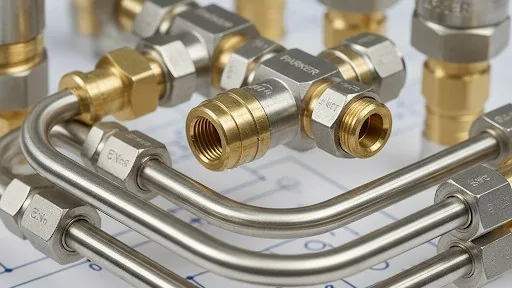
All standard flange types and sizes are stocked in our Jeddah warehouse. Orders received before noon on working days are dispatched the same day. For Jeddah customers, warehouse pickup is available by appointment — eliminating freight time for urgent requirements.
Every flange supplied by Gulf Union Ozone is accompanied by the full Material Test Certificate (MTC) from the manufacturer, showing chemical composition, mechanical test results (tensile, yield, elongation, hardness), and heat/lot number. This allows complete traceability from the supplied flange back to the original steel heat — a requirement for Aramco, SABIC, and SEC projects.
Our ISO 9001:2015 certified quality management system governs the entire supply chain — from approved manufacturer qualification and incoming inspection through dimensional verification, marking, storage, documentation compilation, and dispatch. This systematic approach ensures every flange order leaves our warehouse compliant and traceable.
View ISO 9001:2015 certificate →The Eastern Province hosts the highest concentration of oil and gas, petrochemical, and industrial facilities in Saudi Arabia — including Jubail Industrial City (the world's largest industrial city), Saudi Aramco headquarters in Dhahran, and SABIC affiliates. Gulf Union Ozone serves the full Eastern Province from our Jeddah hub with regular freight runs and expedited delivery options.
Gulf Union Ozone delivers to all 18 administrative regions of Saudi Arabia. From Western Province projects (Yanbu, Rabigh, NEOM) to Riyadh and the Eastern Province industrial corridors, our logistics network ensures timely delivery with proper documentation.
Gulf Union Ozone Trading Co. (CR 4030570569 · VAT 311592828300003) is a Saudi-registered LLC fully compliant with Zakat, GOSI, and HRSD Saudization requirements. We meet IKTVA reporting obligations for Saudi Aramco procurement and provide all documentation required for government and semi-government project procurement.
Detailed SAEP-347 flange supply guides — stock, delivery times, and EN 10204 3.1 documentation for each major industrial hub.
Specify your flange requirements — type, size, pressure class, facing, material, standard, and quantity — and we will confirm stock availability and pricing on the same day. For urgent site requirements, WhatsApp us directly for an immediate response.
CR 4030570569 · ISO 9001:2015 · SAEP-347 Compatible · +966 55 098 8062
Inventory updated: August 2026